AI-native OS for warehouses & manufacturing
Stop searching.
Start knowing.
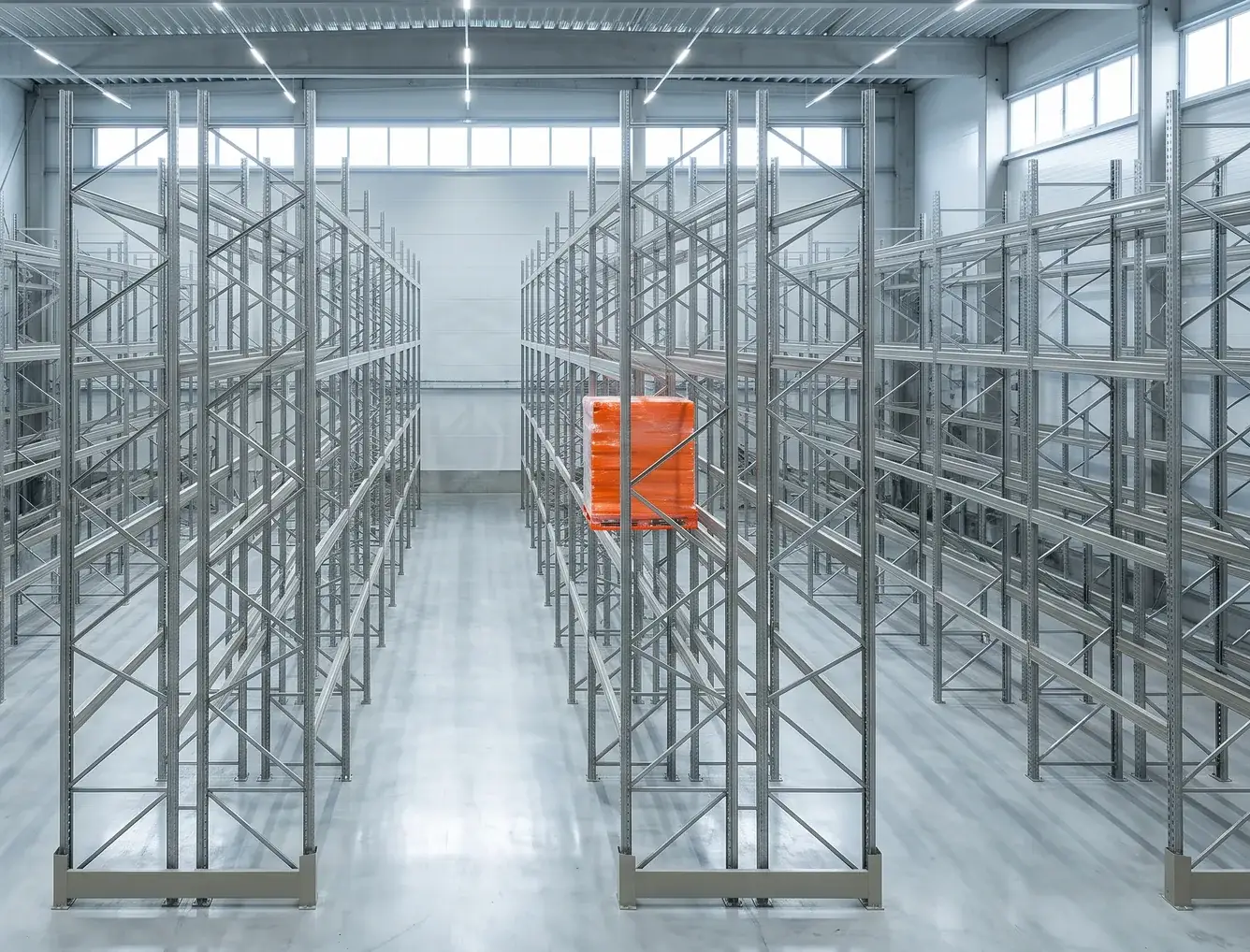
Every pallet, bin and work order gets a live X·Y·Z address in a 3D model of your floor — built in hours, kept accurate by AI.
12 wks to go-liveYour phones & tabletsOne accountable partner
Tent + 2 sleeping bags
A04 · B08 · L3
AI-native OS for warehouses & manufacturing
Know where every item is.
To the shelf, in 3D.
Spatialis OS models your facility in hours, then AI keeps every pallet, bin and work order in its best place — so your team stops searching.
Live 3D model12 wks to go-liveNo CAD no engineers
Tent + 2 sleeping bags
A04 · B08 · L3
- Qty
- 18 ea
- Path
- 42 m
AI slottingFast mover — suggest moving closer to Dock 2.
Warehouses don't fail from lack of effort. They fail from not knowing, in real time, where everything is.
Z.01 / WHAT CHANGES
Win more business.
Sleep better at night.
The software matters less than what it changes for you. Here is what Spatialis OS changes, by role.
Say yes to new business
Take on new customers, SKUs and volume without your floor falling behind, or hiring to keep up.
Grow volume, not headcount
Fit more in the building you have, pass every audit, and fund your first project with government technology-adoption programs.
Productive from the first shift
Visual, photo-guided steps mean a new hire knows where to go and what to do, without weeks of shadowing.
One system to connect, not five
Every module is built on one platform. Connect your ERP once; no rugged-device fleet to manage.
What it takes off your mind
- Recalls. Every lot and cut traced from dock to shipment. A recall is a search, not a week of paper.
- Cold-chain receiving. Trailer, seal, temperature and quarantine checks guided step by step. Nothing skipped.
- Retailer chargebacks. GS1-compliant labels generated by the system, not retyped.
- Turnover. The know-how lives in the system, not in one person’s head.
- Rack safety. Load limits, inspections and damage tracked before they become an incident.
Z.02 / MODEL
Beyond 2D grids.
Legacy WMS treats your warehouse like flat text in a database — rows, aisles, bin codes. Spatialis OS builds a live 3D model instead — every bin, shelf, rack, beam, and aisle mapped in true X, Y, and Z space.
Spatialis gives the AI the one thing it was missing: the actual shape of the room. See how the model is built →
A short, interactive demo of building the Dynamic Spatial Model yourself — not the full Spatialis OS platform.
- 3D Dynamic Spatial Model
- A live digital twin of your facility in true X, Y, Z space — exact coordinates, cubic capacity, and physical constraints for every bin, shelf, and aisle. Built by your own team with a tape measure, in hours.
- Single-Touch Put-Away
- Incoming stock is routed straight to its optimal 3D bin location the moment it hits the dock — no re-slotting, no double-handling.
- Cubic Utilization
- The share of a facility's true volumetric capacity in active use. Industry average sits near 22–27%; Spatialis OS is designed to recover 10–25% more of it.
Z.03 / PLATFORM MAP
One platform.
Every stage of the floor.
Every module runs on one live spatial model and is natively connected. Integrations are only for the systems outside your walls.
Inbound
Inventory
Outbound
Value-added & manufacturing
Across the floor
Select any module or system to see what it does.
FREE GUIDE
15 signs your warehouse layout is costing you money.
A five-minute self-audit to take onto the floor. Spot where space, travel time and labour are leaking, before peak season does it for you.
Z.04 / PLATFORM
Platform
Eight capabilities, one live spatial model underneath all of them.
Not eight products wired together: one system on one spatial model, with nothing to integrate and nothing to keep in sync. Your ERP, storefront and carriers connect from the outside.
Z.05 / DEVICES
Run it on devices
you already own.
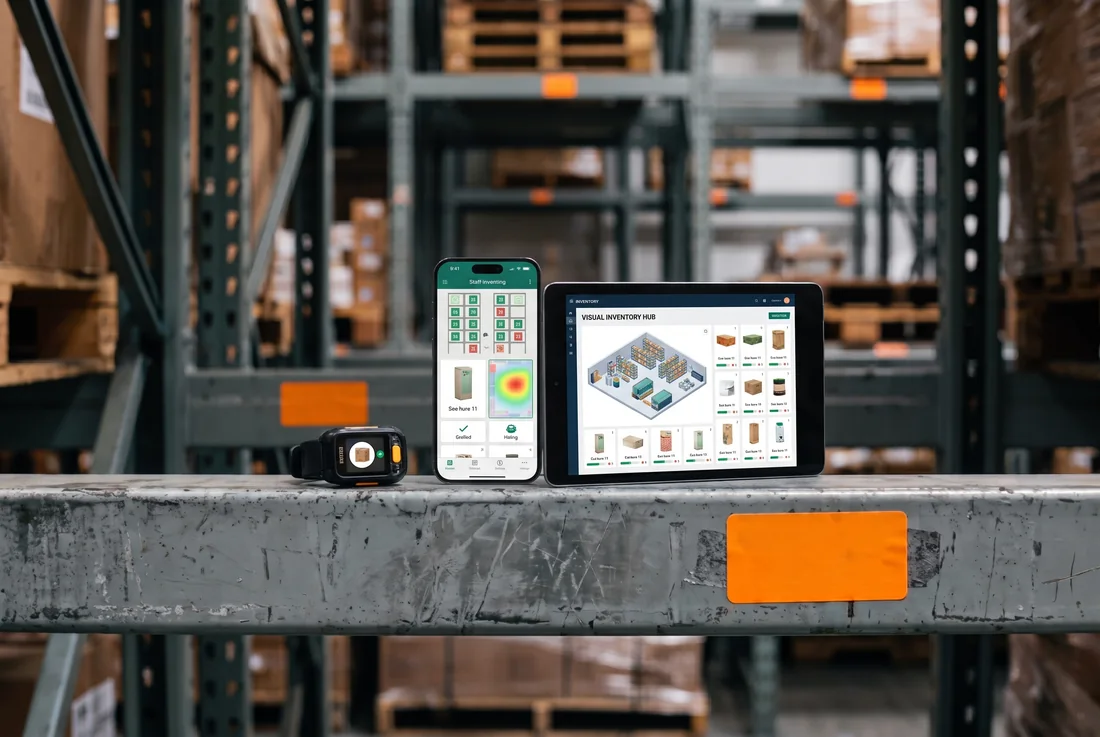
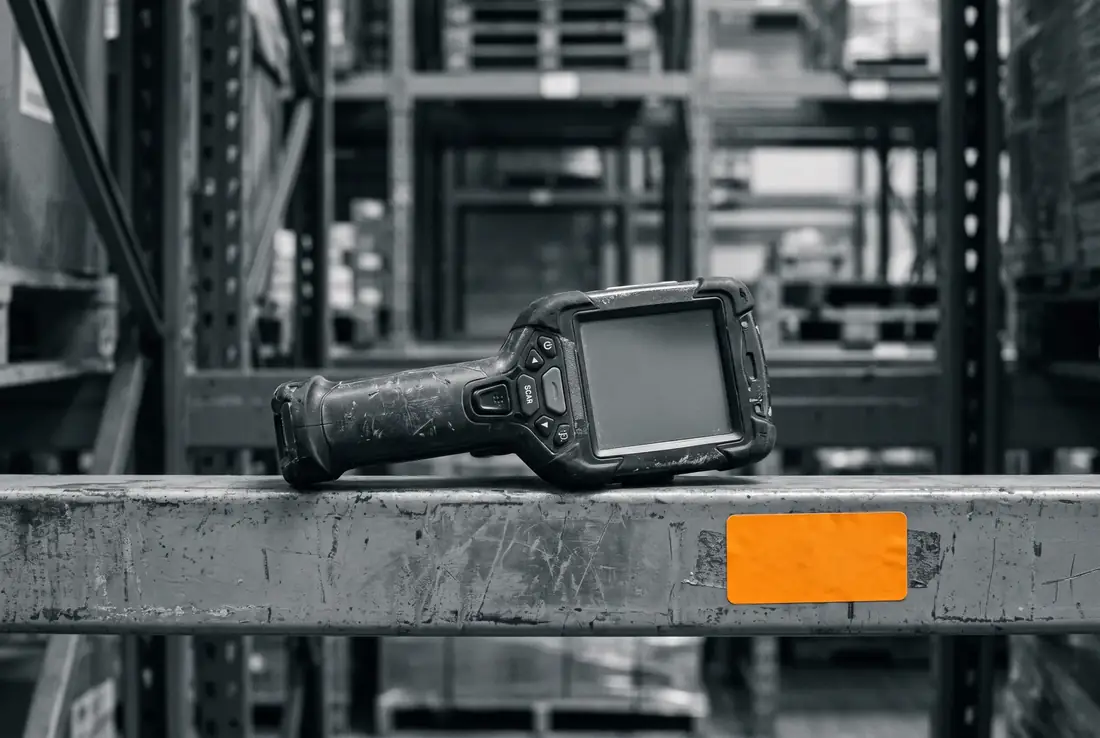
Legacy WMS platforms lock you into $2,000+ rugged scanners. Spatialis OS runs natively on the iOS and Android devices already in the building.
Z.06 / PROOF
What Spatialis OS
is designed to deliver.
New-hire onboarding
Time to go-live
| Inventory Location Accuracy | 98–99.5% |
| Cubic Capacity Recovered | +10–25% |
| Pick Travel Time Reduced | −10–20% |
| New-Hire Onboarding | 2hrs (vs 3–5 days) |
| Rugged Scanners Required | None |
| Time to Go-Live | 12wks (vs 9–18 mo) |
Design targets based on Spatialis OS internal benchmarks and industry research on inventory location accuracy, warehouse cube utilization, picking travel time and onboarding. In the Assess phase we measure your own baseline, so results are tracked on your floor.
Spatialis OS vs. legacy WMS.
| Spatialis OS | Legacy WMS | |
|---|---|---|
| Setup Time | 12 weeks | Months to years |
| Hardware | Off-the-shelf mobile devices | Expensive proprietary scanners |
| User Interface | Modern 3D spatial UI | Clunky 2D text menus |
| Scalability | Agile, cloud-native | Complex infrastructure, high overhead |
| Onboarding | Hours | Weeks |
Z.07 / DEPLOYMENT
Live in 12 weeks,
not 9–18 months.
Four phases, one accountable partner, most facilities running at normal volume the whole way through. See the full deployment timeline →
Discovery & Digital Twin Setup
Map the facility, define workflows, build the 3D model.
Configuration & Integration
Connect ERPs and eCommerce, configure AI models.
Phased UAT & Training
Flow-by-flow testing and two-hour staff onboarding.
Go-Live & Hypercare
Full production launch with 30-minute SLA support.
Z.08 / WHO YOU’LL WORK WITH

You get a partner,
not just a login.
Hi, I’m Sébastien Bouthillette, CTO of Spatialis OS. I’ve spent 15 years in IT strategic planning, helping companies decide where their technology should take them, and built warehouse software as a CTO before founding Spatialis OS.
I don’t hand you software and disappear. I map your operation with you, set up the workflows your team will actually use, and stay involved until it runs. One person accountable from start to finish.
- 01 · AssessMap your floor and flowsA 3D model of your facility, your baseline numbers and a roadmap. Useful even if you don’t buy.
- 02 · ImplementSet it up with your teamWorkflows, ERP connection, labels and training, in 12 weeks.
- 03 · OptimizeKeep improving as you growAI slotting adapts as volume grows; we review results together.
+ Help applying for government technology-adoption funding for your first project.
Z.09 / FAQ
What teams ask
before they switch.
01What makes Spatialis OS different from a traditional WMS?
Legacy WMS platforms treat a warehouse like flat text in a database — rows, aisles, bin codes. Spatialis OS builds a live, millimetre-accurate 3D model of the facility instead: every bin, shelf, rack, beam, and aisle mapped in true X, Y, Z space. The AI optimizing your floor is working from the actual shape of the room, not a spreadsheet.
02How long does deployment take?
12 weeks on average, not the 9–18 months typical of legacy WMS rollouts: discovery and digital twin setup (weeks 1–2), configuration and integration (weeks 3–5), phased UAT and training (weeks 6–9), and go-live with hypercare support (weeks 10–12).
03Do we need to buy new scanning hardware?
No. Spatialis OS runs natively on the iOS and Android devices already in the building — standard camera scanning, inexpensive Bluetooth ring scanners for hands-free picking, or BYOD and off-the-shelf tablets and phones — instead of the $2,000+ proprietary rugged-scanner fleets legacy platforms require. No rugged-scanner fleet to buy, repair or replace.
04How does the AI slotting actually work?
The engine recalculates travel-cost-to-pick daily against the live 3D model and automatically pushes optimal putaway and re-slotting tasks — no manual slotting rules to maintain. It is designed to recover 10–25% more of a facility's true cubic capacity.
05How fast can new floor staff get productive?
Turn-by-turn 3D wayfinding runs on whatever handheld a picker is already carrying, so new hires reach full productivity in about two hours instead of the three to five days typical onboarding takes.
06Does Spatialis OS integrate with our ERP or eCommerce platform?
Yes — NetSuite, Microsoft Dynamics 365, Shopify, WooCommerce and Magento connect out of the box, plus integrations with Acumatica, Epicor, QuickBooks, Lightspeed, SAP Business One, Odoo, and Rootstock, and a documented REST API and real-time webhooks for anything custom. See the full integrations page →
07Can it handle catch weight and variable-weight items?
Yes. Catch Weight gives you native scale integration with automatic per-unit pricing for variable-weight items — the scale reads it, the system prices it, no manual entry.
08Does it handle labeling — item, pallet, and packing lists?
Yes — LabelStudio is a built-in label designer used across the platform: item, case, and pallet labels, inner and outer cartons, GS1-128 barcodes, and even standard paper packing lists, with zero third-party licensing or add-on modules.
09Can Spatialis OS handle kitting and light assembly?
Yes — Assembly Core gives floor staff a visual, step-by-step kitting flow with multi-level BOM tracking, so kitting and other value-add services run without a separate MES.
10What support do we get after go-live?
Hypercare for the first two weeks, with under-30-minute acknowledgement during floor stabilization; standard business-hours ticketing (under 2 hours) after that; and a 24/7 emergency line with continuous engineering until restored for critical incidents.
11What results should we expect?
Spatialis OS is designed to deliver 98–99.5% inventory location accuracy, 10–25% more usable cubic capacity and 10–20% less pick travel time. Those are design targets, not promises: in the Assess phase we measure your current baseline, agree on the targets that matter to you, and report against them after go-live.
Z.10 / ACCESS
Ready to see your warehouse
in three dimensions?
Get your free 3D floor model.
We model your floor as it is today in 3D, with pallet positions and cubic capacity measured, and show where Spatialis OS can recover space and cut travel time. It’s free.
Planning a re-rack or a move? We can also model the new layout →
- Sébastien replies within one business day.
- A 20-minute call to understand your operation.
- We model your floor in 3D and show you where you lose space and time.